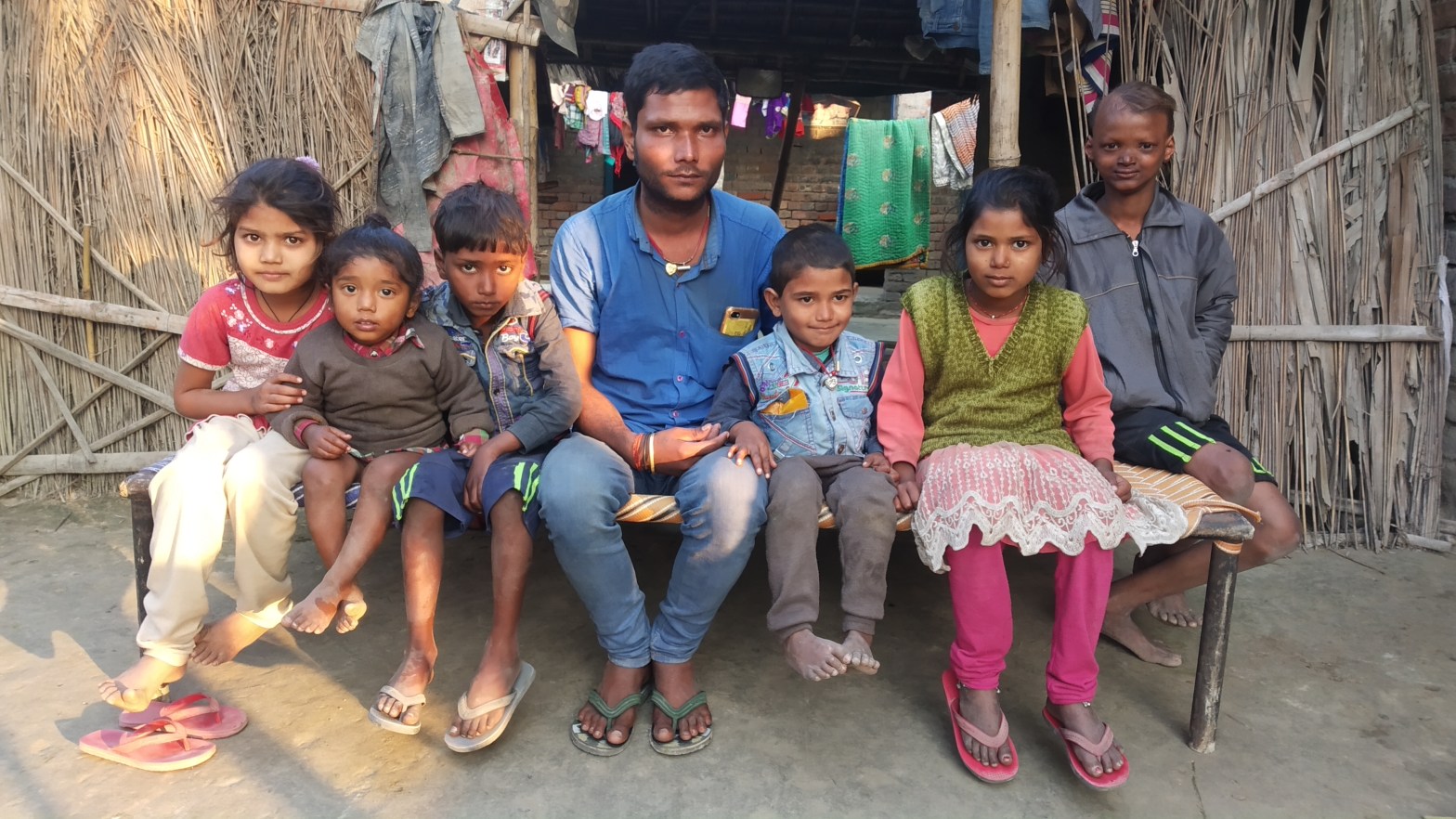
Diagnosis of a communicable disease like Tuberculosis is terrifying for anyone. Jitendra Kumar and his family members were shattered when he was diagnosed with Multi-Drug Resistant Tuberculosis (MDR-TB).
Jitendra lives in Barbatta Panchayat which comes under the Sarairanjan block of the state of Bihar. According to the India TB report 2019, Bihar alone constitutes 5% of the total TB burden of India. Jitendra’s father died due to an accidental electric shock when he was very young and his mother also passed away when he was a teenager. He has two elder brothers who looked after the family by working as daily wage laborers. Because of extreme poverty and no formal education, he started working as a driver on a rented auto-rickshaw and earns around Rs 200 per day.
Three years ago, 22- year old Jitendra’s life took an unpleasant turn when he started showing symptoms of cough and weight loss. He went to the nearby town and received treatment from a private health care provider. This cost him a hefty sum of twenty thousand which he borrowed from his brother’s wife who mortgaged her jewelry to arrange for this sum. Not only did Jitendra pay double the amount to get the jewelry back, but he also showed no signs of recovery even after two months of treatment. Distressed and frustrated Jitendra, then, contacted Mintu Devi, the Accredited Social Health Activist (ASHA) from his panchayat. She took him to the nearby public health care facility where he was diagnosed with Tuberculosis. He started taking the prescribed drugs, but his conditions did not improve. Thereafter, the ASHA contacted Rohit Kumar, IIHs field staff from that area. Rohit took him to Darbhanga, a nearby district for further diagnosis doubting that Jitendra might have developed a Multi-Drug Resistant form of Tuberculosis (MDR-TB) as the block hospital of Sarairanjan had no facility for the treatment of MDR-TB.
MDR TB patients face a number of challenges in getting themselves diagnosed. For instance, there is no proper accommodation for the patients visiting from far-flung areas, and no government-provided mode of conveyance. Jitendra was diagnosed with MDR TB. The treatment went on from December 2017 to December 2019. For two long years, Jitendra was on medications and under constant supervision of ASHA Mintu and IIH team. IIH personnel not only helped in ensuring Jitendra’s diagnosis and treatment for two years, but they also provided nutritional support for more than three months in the initial phase of the treatment for faster recovery.
But Jitendra’s story doesn’t end here. On one hand, he was struggling with the disease and was not able to work; on the other hand, his would-be in-laws canceled his marriage due to TB. Though his immediate family supported him, neighbors never missed a chance to stigmatize and discriminate. For instance, people denied renting his autorickshaw, relatives and local community deserted his family, and he was continuously bombarded with disparaging and stigmatizing comments. One can imagine the mental trauma he must have undergone.
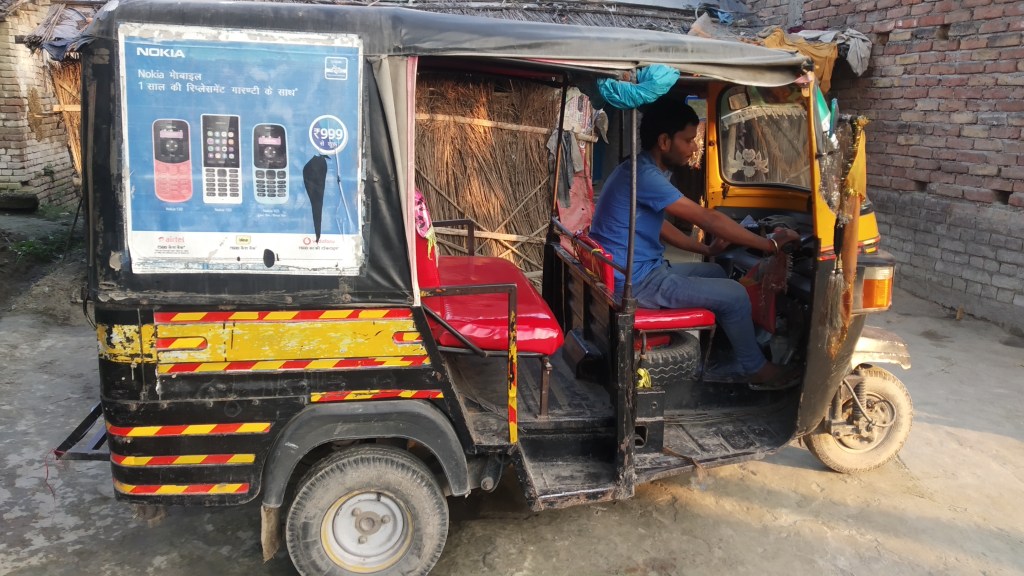
He fought against all the odds. He said; “hum apna mann bana liye thay ki kisi ka sunna nahi hai, bas jaldi se thik hona hai aur aage badhna hai” (I was determined not to pay heed to the naysayers, I have to recover soon and move forward in life). In addition to taking care of his health, he thought of doing good in society. Since his experience made him understand the gravity of the disease and the importance of taking the full course of TB medication, he is now engaged in counseling the patients of his area. He also refers symptomatic patients to the ASHA and IIH members. Those who cannot afford to go to the hospital for diagnosis, he even accompanies them in his auto.
Medical treatment has provided a cure for TB, but there’s no easy therapeutic recipe to overcome the social barrier and stigma related to it. There is a requirement of a social impact assessment of TB in addition to tackling it clinically. It is still considered a dirty and shameful disease especially in low-middle income areas where it is most prevalent. People’s voices who have lived and are living with TB should be central to every agenda related to drugs, accessibility, diagnostics, and of course stigma. Curbing TB requires a social health program including all determinants of health; economic, political, social and environmental.
Blog by: Saroj
 Innovators In Health